An ERP System May Be Affordable at First — But What Will It Really Cost?
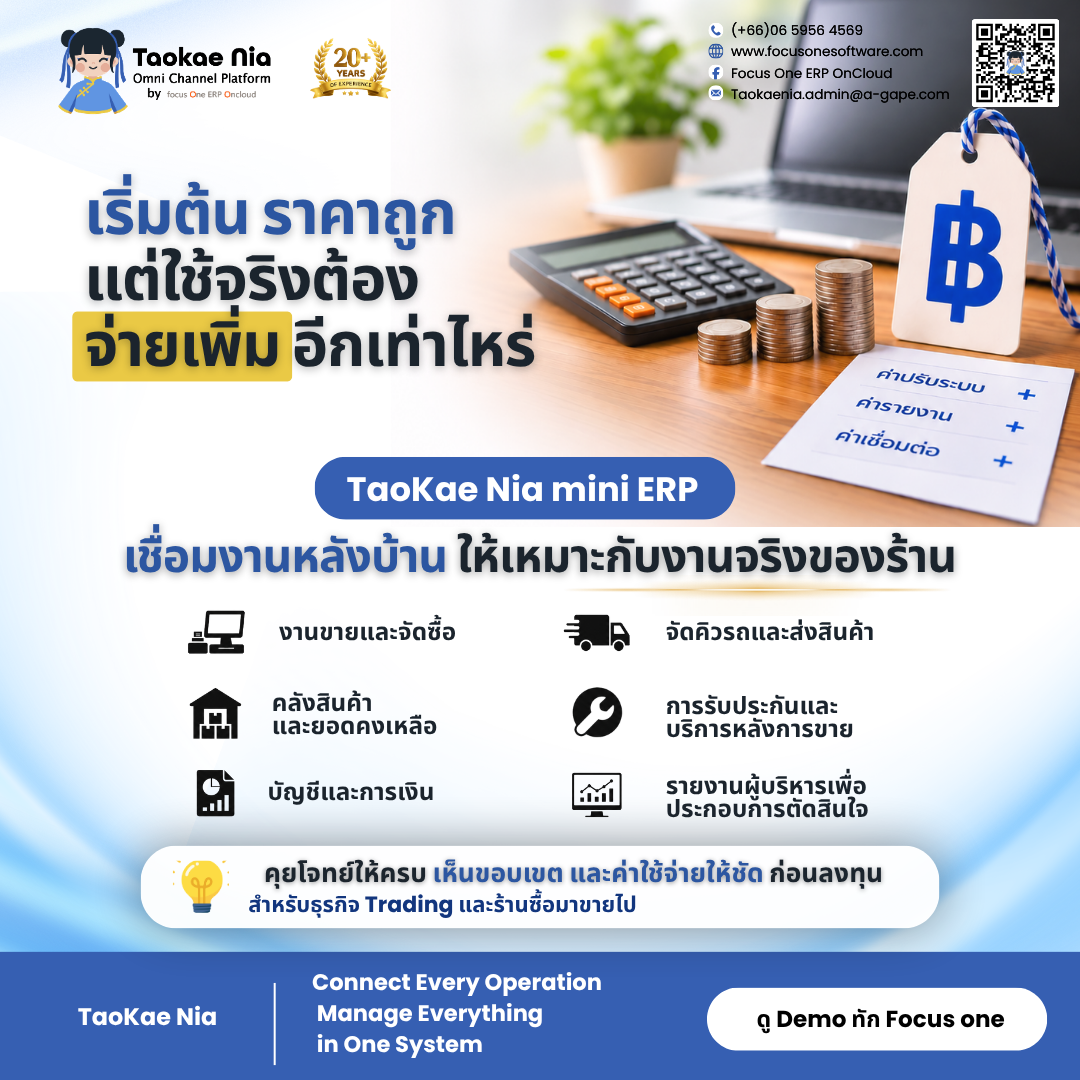
An ERP System May Be Affordable at First, But What Will It Really Cost?
Look Beyond the Initial Price and Consider the Total Cost of ERP Ownership
When selecting ERP Software for SMEs, many businesses begin by comparing software packages or monthly subscription fees. The objective is often to find a solution that can support essential back-office operations within a reasonable budget.
However, an attractive starting price may not represent the full cost of implementing and operating an ERP system.
Once implementation begins, some organizations may discover additional requirements, such as ERP Customization, System Integration, or Custom Reporting. These requirements can increase the overall investment beyond the original budget.
Before investing in an ERP solution, businesses should therefore evaluate the Total Cost of Ownership (TCO) rather than focusing solely on the initial software price.
What Costs Should Businesses Consider Before Implementing ERP?
A comprehensive assessment of ERP Implementation Costs should include both initial expenses and potential ongoing costs.
1. Software & Licensing Costs
Does the proposed software package include the number of users, modules, and features required by your business?
If your organization needs to add more users or expand its system capabilities, what additional licensing or subscription fees may apply?
2. Implementation & Customization Costs
Does the proposed implementation scope include configuring the system to align with your business processes?
If workflow modifications or additional functionality are required, how will these changes be assessed and priced?
3. System Integration & Data Migration Costs
If your business currently maintains customer records, product information, inventory balances, or accounting data in existing systems, will migrating this information into the new ERP involve additional costs?
Are integrations with other business applications included in the implementation scope, or will they require separate development and service fees?
4. Reporting, Training & Support Costs
Are the business reports your organization needs already available within the system?
What costs are associated with user training, system maintenance, technical support, and post-implementation services?
Understanding these expenses in advance can help organizations establish a more realistic ERP budget and reduce the risk of unexpected costs.
TaoKae Nia (TKN) mini ERP is an ERP Solution for SMEs designed to connect essential business operations within a unified platform.
The solution emphasizes defining an appropriate implementation scope based on each organization's business model, operational requirements, and priorities.
By identifying essential business processes before implementation, organizations can evaluate the capabilities most relevant to their operations, including:
- Sales, Purchasing, Inventory & Accounting
Connect sales, purchasing, inventory, and accounting processes to support more structured and consistent back-office operations.
- After-Sales Service & Logistics Management
Support warranty management, after-sales service activities, and delivery scheduling according to the organization's operational requirements.
- Business Reporting & Analytics
Access sales reports, inventory information, and financial data to help management monitor business performance and support informed decision-making.
Selecting the appropriate combination of capabilities allows businesses to assess their ERP requirements in relation to their operational needs and available budget.
A Cost-Effective ERP Investment Starts with a Clear Understanding of Scope and Costs
The right ERP system is not necessarily the one with the lowest starting price. It is the one that supports your business requirements with a clearly defined implementation scope and a cost structure aligned with your budget.
Before making an investment decision, organizations should discuss essential functionality, implementation services, customization requirements, integration needs, and ongoing support with their ERP provider.
A clear understanding of these factors enables businesses to plan their ERP Investment more effectively and evaluate the long-term value of their chosen solution.
Define Your Requirements. Understand the Full Scope. Invest with Confidence.
📩 Interested in a demo or free consultation?
Contact the Focus One team today and discover how Taokae Nia can transform your business.
Email: [email protected]
Tel: 088-166-8880
Powered by Froala Editor


